
After several years of strong growth, Edmonton’s condominium segment has begun to wind down as an influx of newer rental product at lower price points saturates the market. Year-to-date condominium sales dropped six per cent in 2025, falling to 3,376 units while the average price accelerated, now sitting at $212,672, up more than six per cent from year-ago levels. Immigration and interprovincial in-migration propelled growth in the city between 2022 and 2024, with a population increase of 140,000 in a relatively short period. While the number of newcomers has dwindled since peak levels were reported in Q3 of 2023, growth remains elevated in comparison to pre-pandemic numbers.
Investors and first-time buyers drive demand for condominiums
Investor interest, particularly from Ontario, continues to play a meaningful role in Edmonton’s housing market. With no land transfer taxes or rental control, the appeal is obvious from an investment perspective. Buyers are targeting smaller condominium buildings with 10 to 20 suites, priced from $100,000 to $150,000 per door. Many of these properties were rentals converted to condominiums more than a decade ago, but deferred maintenance, rising condo fees and governance issues have frustrated unit owners. Due diligence is imperative when buying certain buildings and a professional condo document review is always recommended. Some investors are now acquiring these buildings, de-stratifying them and restoring professional management, effectively returning better quality rental inventory to the market.
Choice has expanded significantly across the city, with condominiums in various shapes and sizes coming on stream across the city, from rowhouse and infill walk-ups to multi-units, townhouse and secondary suites, all competing for buyers’ attention. Location is key among first-time buyers, while investors tend to be more flexible.
Sought-after neighbourhoods for condominium buyers
Wihkwentowin continues to attract much of the condominium activity, as buyers are drawn to the amenity-rich, downtown community once known as Oliver. The central neighbourhood overlooking the North Saskatchewan River Valley is ideal for those seeking an active lifestyle and retail shops, restaurants and entertainment, as it offers an equal combination of both older and newer stock in a vibrant residential backdrop with tree-lined boulevards.
Suburban Windermere also remains highly coveted for its high-end condo lifestyle, its modern amenities, green spaces and housing options. Situated on the southwest side of the city, the community offers newer condominium product under the $300,000 price point.
Buyers weigh new versus older product
While demand remains stable in the city, the increase in inventory levels has provided a more competitive landscape. The year ahead could potentially see more transactions while condominium values are expected to soften as the differential between old and new stock becomes more apparent. Buyers may find that a smaller unit in a newer building with amenities may work better than a larger unit in an older building. Construction type is an increasing factor in decision making, with steel and concrete high-rise product appealing to those prioritizing lifestyle, while wood-frame walk-up units near post-secondary institutions offer greater affordability.
Activity in Edmonton’s top-tier condominium segment over $1 million is minimal, but for those seeking accommodation at that price point, the ICE District continues to be the epicentre of high-end demand, attracting downsizers and high-earning young professionals. Among the most popular condominiums is Legends (sitting atop the JW Marriot) and SKY Residences, which continue to draw interest. The Wihkwentowin neighbourhood also offers up several prestige buildings including Pearl Tower overlooking the river valley and ICON Towers along the Fourth St. Promenade. Luxury units tend to trade off-market, reflecting the exclusivity of the segment.
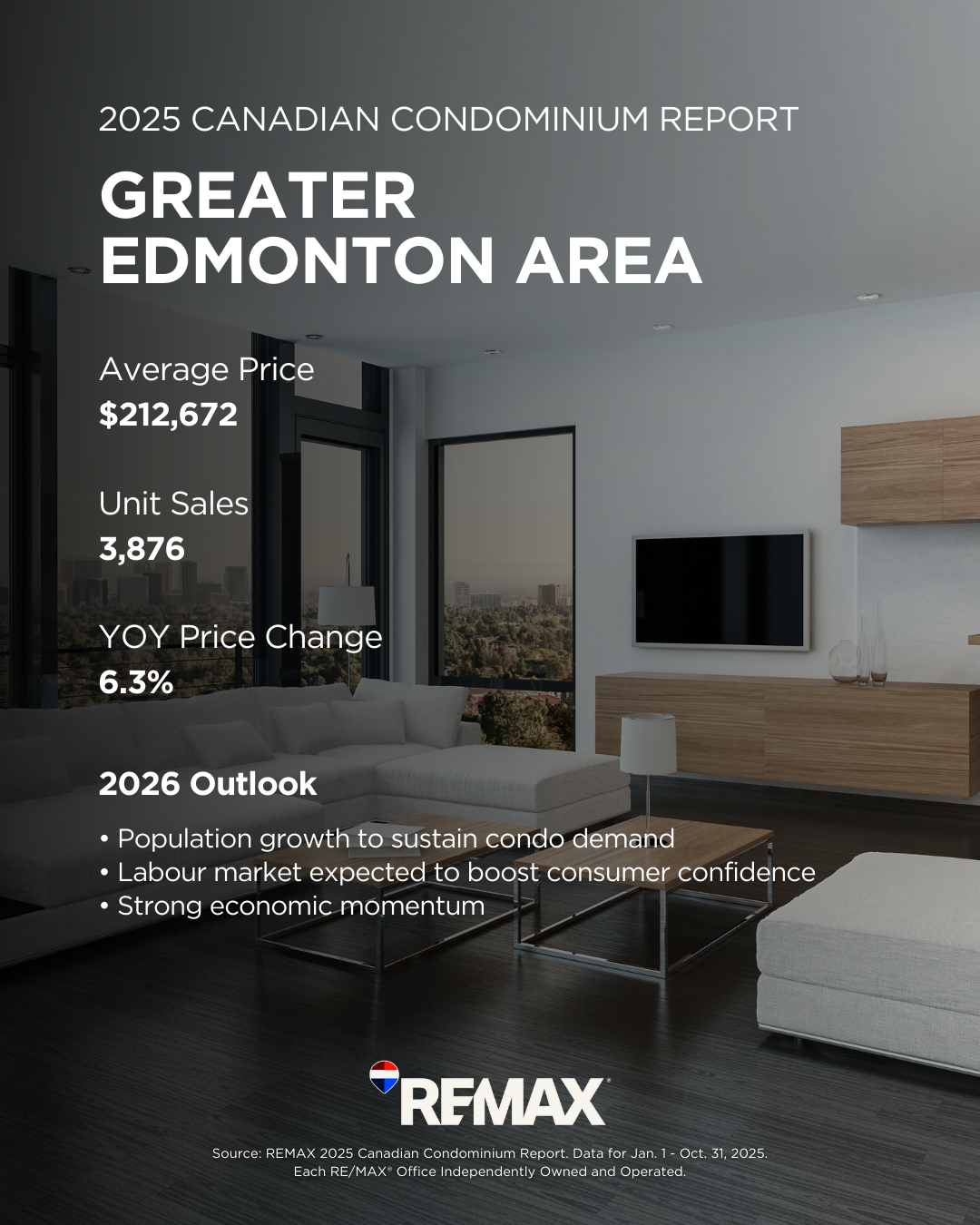
Edmonton’s economic outlook is poised to strengthen as the city heads into 2026, supported by steady population growth, renewed private-sector investment and a more favourable interest rate environment. After a period of moderating expansion in 2024 and early 2025, an upswing is expected as energy markets stabilize, major infrastructure and industrial projects ramp up and labour market conditions continue to improve. Gains in the tech, logistics and professional service sectors are expected to outpace the national average, bolstering employment and consumer confidence. That, combined with the city’s relative affordability, lay the groundwork for renewed momentum in the condominium market in the year ahead.